Most of the craft lives in knowing what to cut. Assembling the good shots is the easy part; what makes the film is everything you decide won’t survive. And that’s hard, because almost nothing on a wedding day is actually worthless. It’s that not all of it belongs in the same piece.
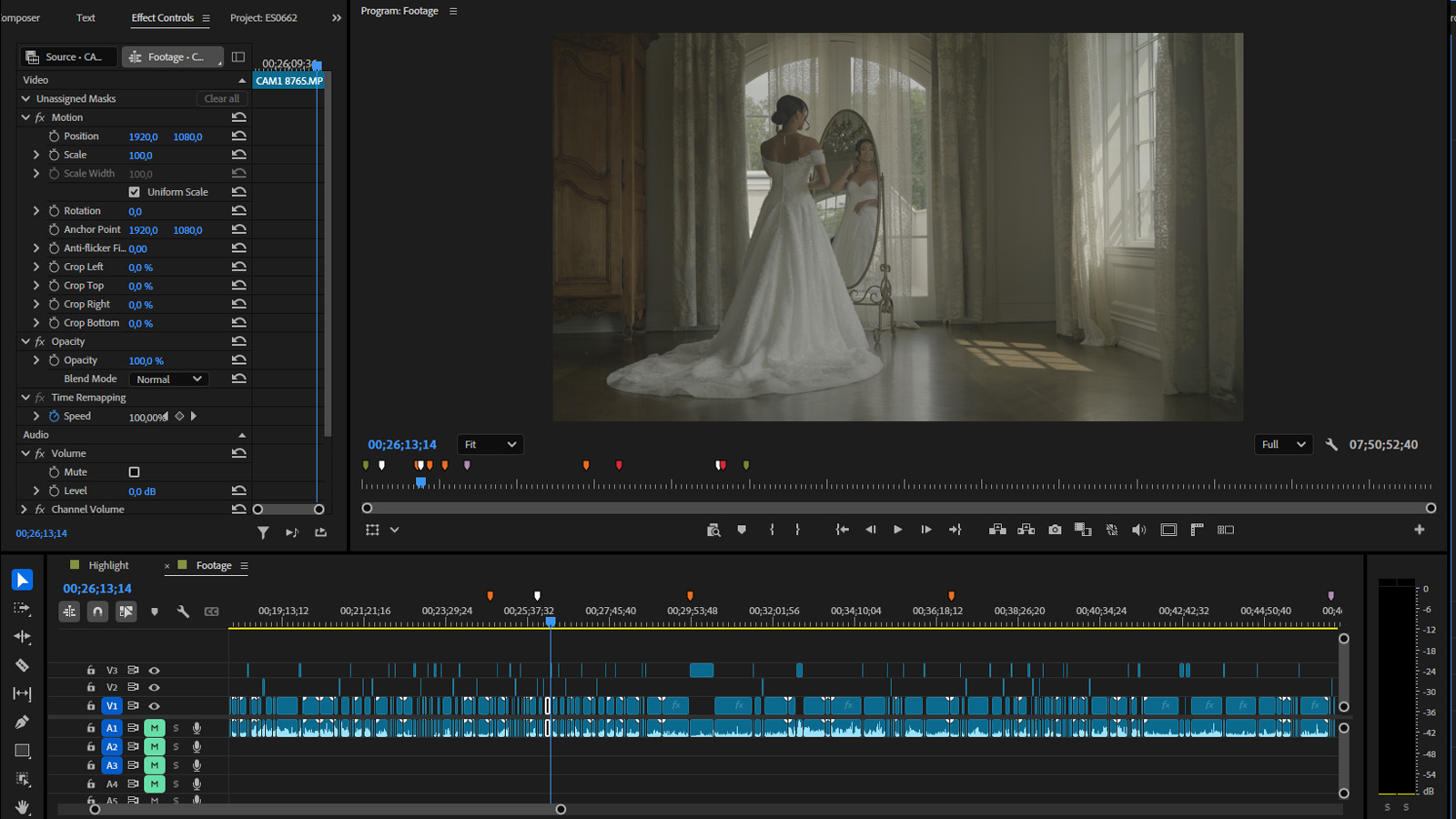
What to cut from a wedding film, first pass
Plenty of material goes without any argument. Setup. Walking between locations. Repeat angles on a moment you’ve already covered. Anything soft, blown out, or ruined by audio. The second-best take of a shot you’ve already used. A guest waving at the lens. That’s your easy fifteen minutes and it costs you nothing to lose.
The material that only looks essential
The harder calls come next, and they’re about redundancy more than quality. Three lovely portrait shots where one carries it. The whole processional when the arrival was the actual moment. A second speech saying what the first already said. All good footage. All of it slowing the film down without giving a viewer anything new to register.
Stop asking whether a shot is good. Ask whether the film still needs it after the shot that came before. Apply that honestly and you’ll pull out more than you expected to.
Cutting for shape, not for time
Trim toward a runtime and you get an evenly squashed film with no rhythm left in it. Trim to protect a shape and you get one that moves. Tighten the sections that build. Leave the ones that rest alone, even when they’re the longest thing sitting on your timeline. We work through how structure and length relate in how long should a cinematic wedding film be and wedding film story structure.
What to protect
A handful of things should get through every pass intact. The vows, complete instead of sampled, which we cover in editing wedding vows. The moment before an entrance, not just the entrance. The gap after a line lands where nobody’s saying anything. And reactions from people who aren’t the subject at all: a father, a friend, a grandparent watching from the side. Couples come back to those passages, and they’re exactly what an editor working to a number cuts first.
Cutting differently for different films
One set of footage supports wildly different decisions. A cinematic film throws out whatever doesn’t serve the story, including things that mattered enormously on the day. A full wedding documentary keeps nearly all of it, because the record is the entire job. Neither one is a watered-down version of the other, which is what we argue in cinematic vs documentary wedding film editing.
Where the cut material goes
Hardly any of it is truly wasted. What doesn’t fit the cinematic cut often fits a documentary edit, a run of vertical pieces, or a teaser. It’s part of why one wedding can carry several deliverables, which we lay out in turning one wedding into a week of reels.
Knowing when to stop
There’s a point where trimming stops taking out excess and starts taking out the film’s air. Holds shorten, reactions vanish, and you’re left with something efficient and cold. Watch the full cut twice before your final pass, once for pace and once with your hands off the keyboard entirely, and the over-trimmed stretches will announce themselves. The work runs in Adobe Premiere Pro, against the standard we describe in what makes a wedding film cinematic.
Looking for a post-production partner?
We edit cinematic wedding films for filmmakers and studios — graded, paced, delivered in ten days, under your brand.